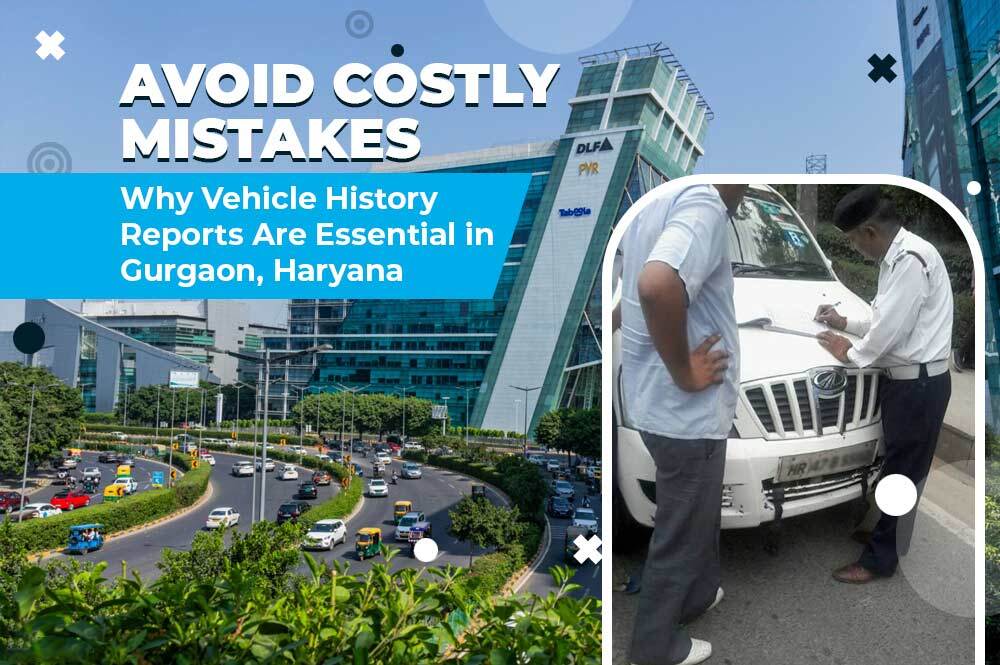
New: Avoid Costly Mistakes: How To Check Vehicle History Reports In Gurgaon, Haryana?
Soumi Roy 07-04-2026

Check Vehicle Owner Details @ ₹199*
Avoid fraudulent used car details! | Buy used cars with high market value | Ensure the used car justifies its price
Table Of Content
My friend Shruti Malhotra’s experience with cars seems quite interesting. She faced too many types of scams when she or her siblings dealt with cars. Shruti has lived in Gurgaon, Haryana, for almost a decade now.
Between March 2025 and March 2026, car sales in India happened to be a soaring forty-seven lakh, a 16% increase compared to the similar period of the previous financial year. These figures give an impression of financial success in society as a whole.
But society has been failing due to rampant scams involving the trade of cars and vehicles. Gurgaon, Haryana, is in no way free from all these scams. The more vehicles are purchased, the greater is the possibility of scams in car trading. In this blog, let us discuss car owners' vulnerability to scamsters involved in car trading.
What Are the Most Common Second-Hand Car Scams in Gurgaon, Haryana?
If you're planning to buy a used or second-hand car in Gurgaon, Haryana, it's important to check a few key things before finalizing your purchase. Gurgaon is one of the largest second-hand car markets in India, offering buyers plenty of options at competitive prices. However, while buying a used car can help you save money, it also comes with certain risks.
AutoHealth explains the most common types of fraud in the used car market in Gurgaon, Haryana, and provides practical tips on how to identify these scams and avoid becoming a victim.
Odometer Tampering: How Do Fraudsters Cheat Used Car Buyers in Gurgaon, Haryana?
One of the most common scams is rolling back the odometer fraud, it is show fewer kilometers than the car has actually traveled. A lower mileage makes the vehicle appear newer and more valuable.
Warning Signs
- Excessive wear on the pedals and steering wheel
- Damaged seats despite low mileage claims
- Incomplete service records
- Sudden mileage jumps between service visits
How to avoid it:
- Check the service history.
- Compare the odometer reading with maintenance records.
- Check maintenance invoices
- Inspect the steering wheel, pedals, and seats for excessive wear.
Hidden Accident History: How Do Fraudsters Hide Accident-Damaged Cars in Gurgaon, Haryana?
Many sellers repair accident-damaged vehicles and sell them without disclosing the previous damage.
Common Tactics Used by Sellers:
- Repaint damaged areas to hide previous repairs
- Replace visibly damaged components with new or used parts
- Conceal structural damage and repair work
- Avoid disclosing the vehicle's insurance claim history
Warning signs:
- Uneven paint finish
- Misaligned doors or bonnet
- Welding marks on the chassis
- Airbags replaced or missing
How to Avoid It (Using Online Verification)
If you want to quickly check a vehicle's accident history report, you can use the AutoHealth Car Accident History service by following these simple steps:
- Visit the Car Accident History page.
- Enter your vehicle registration number.
- Complete the required details.
- Receive the accident history report via WhatsApp or email.
The report provides important information about the vehicle's accident history, including:
- The date and time of each reported accident
- The total number of accidents reported
- Additional accident-related details (if available)
Reviewing this report before purchasing a used car can help you avoid hidden accident-damaged vehicles and make a more informed buying decision
How to Avoid It (Physically)
- Get the vehicle inspected by a professional mechanic
- Review the vehicle's insurance claim records.
- Ask for repair and service documentation.
- Inspect the vehicle carefully in daylight.
Always inspect the vehicle carefully and verify its accident history before buying.
Fake RC: What is Fake RC Document Scam?
Some scammers use forged Registration Certificates or sell vehicles with duplicate documentation.
How to avoid it:
- Verify the RC details.
- Match the chassis number and engine number with the documents.
- Ensure the owner's name matches the seller's identity.
Often, scammers sell cars that they never owned. These scammers present forged documents as the title documents. If Shruti had failed to find out in time that there was a mismatch in the name of the actual owner of the Toyota Innova and the name of the owner of the Toyota Innova in the forged document, then Shruti might have lost a lot of money, and the scammer would have looted a fortune.
Fake Online Listings
Scammers post attractive advertisements with extremely low prices to collect advance payments.
Never:
- Pay a booking amount without seeing the vehic
- Transfer money to unknown sellers.
Outstanding Loan Not Cleared:What is a Loan Scam?
Some cars are sold while still under a bank loan. If the loan isn't cleared, ownership transfer can become difficult.
Check before buying:
- Ask for the No Objection Certificate (NOC) from the lender.
- Verify whether the vehicle has any hypothecation.
Stolen Vehicle Scam
A stolen vehicle may be sold using fake documents at an attractive price
Red flags:
- Price is far below market value.
- Seller avoids meeting at their residence.
- Incomplete paperwork.
Always verify ownership details before making any payment.
Fake Service Records
Some sellers create fake maintenance records to make the vehicle appear well maintained.
- Contact the authorized service center.
- Cross-check service dates and mileage.
She shared, “PUC certificates for used cars are generally due every six months. The car owners must get the emissions from their cars checked every six months at a designated pollution check center. Failing to get a PUC certificate within the due date, the owners of the cars have to pay fines as set by the local authorities.”
Flood-Damaged Cars
Cars affected by flooding are often cleaned and repaired before resale.
- Rust under the seats
- Water stains inside the cabin
- Damp smell
- Electrical issues
Tips to Stay Safe While Buying a Second-Hand Car in Gurgaon
- Verify the(RC).
- Must Check the chassis and engine numbers
- Inspect the vehicle with a trusted mechanic.
- Review the complete service history.
- Confirm there is no pending loan or legal dispute.
- Avoid cash payments without proper receipts.
- Complete the ownership transfer promptly
- Verify the vehicle's accident history and ownership details before making the payment.
Conclusion
Driving a vehicle is not all about control and road safety. Everything about a car starts with the owners’ safety against fraud and their diligence in becoming law-abiding vehicle owners. An aware car purchaser, and in a broader sense, an aware purchaser of any vehicle, not just keeps the roads safe, but also saves themselves from crimes related to the purchase of vehicles. Car Check app/service of AutoHealthTM empowers any vehicle purchaser to be an aware purchaser. Besides, the cost of using Car Check is a pittance compared to all kinds of costs that are involved with the purchase of vehicles. Car Check can be a guiding angel for all aware car purchasers.
FAQ
What is a Vehicle History Check?
Vehicle History Check generates a holistic report on the vehicle’s ownership and all mechanical units of the car that were available with the authorities on the date of checking of Vehicle Information. This report can be generated for all the license plate numbers issued by the authorities.
Why does one need to check a Vehicle History Reports?
A Vehicle History Reports helps buyers of a car know the car’s ownership and mechanical condition up to the date of checking the Vehicle History. It protects a buyer from fraudsters and scammers. It helps prevent the passing of debt and penalties from the previous owner to the current owner.
How does Car Check of AutoHealth help check the Car History Report?
AutoHealth takes the license plate number of a vehicle and gives the ownership information of the vehicle, mechanical condition, accident history, and maintenance history of the vehicle. It empowers car buyers with information that protects them from fraud and scams, as well as from passing of debts and penalties from previous owners of the vehicle.